



Faculty of Arts Concludes its 6th International Conference with Recommendations to Promote Artificial Intelligence Ethics and Envision the Future of the Humanities
- Hits: 114

A set of recommendations supports the ethics of artificial intelligence, the development of scientific research, and the establishment of academic policies that keep pace with digital transformation.
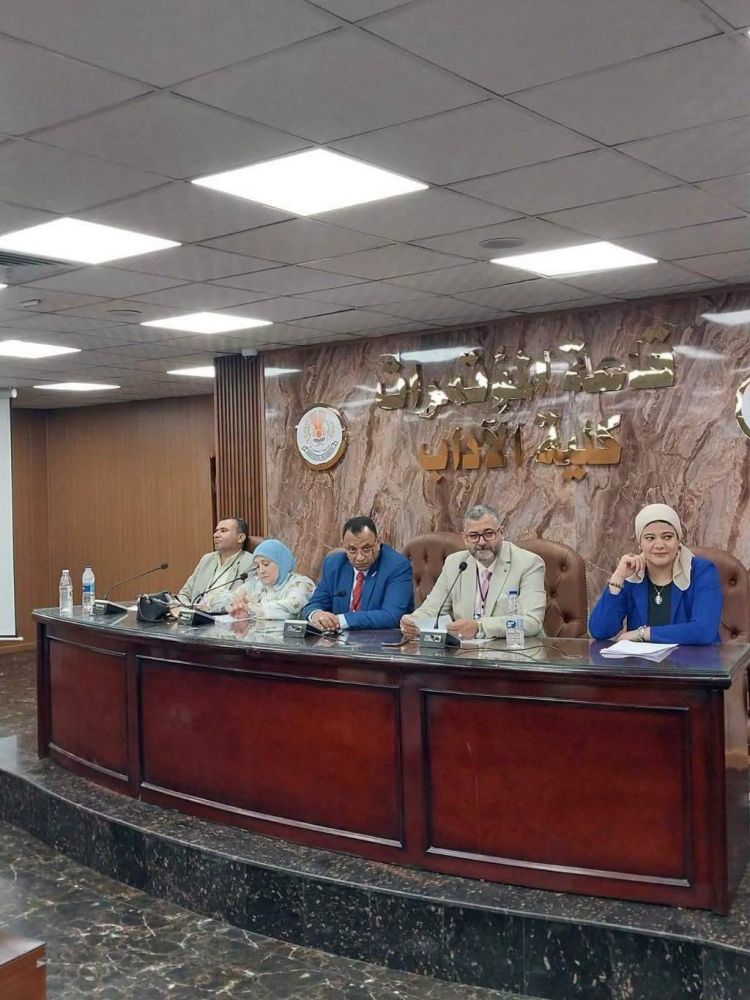
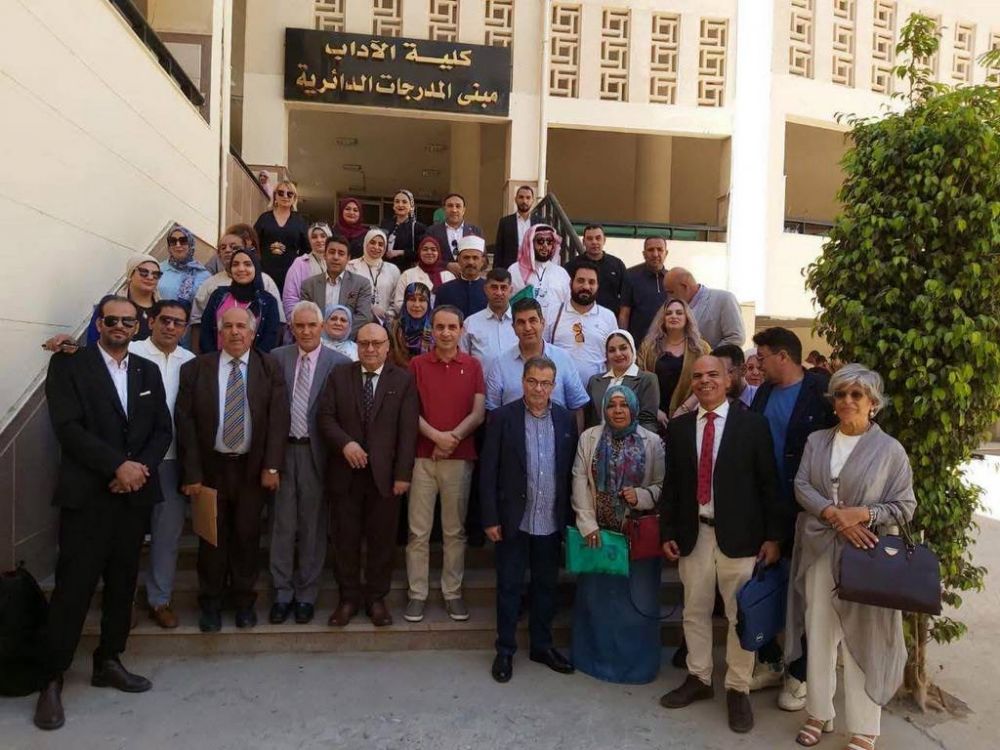
The Faculty of Arts at Mansoura University concluded its sixth international conference, held under the title: “Philosophy and Artificial Intelligence to Envision the Future of the Humanities in the Age of Digital Transformation.” The conference was held under the patronage of Prof. Cherif Khater, President of Mansoura University, and the leadership of Prof. Tarek Ghalwash, Vice President for Graduate Studies and Research and Supervisor of the Community Service and Environmental Development Sector. It was chaired by Prof. Mahmoud El-Gaeidy, Dean of the Faculty of Arts and Conference Chair, and attended by Prof. Mosaad Salama, Vice Dean for Graduate Studies and Research and Conference Vice Chair, Prof. Adel Awad, Head of the Philosophy Department and Conference Rapporteur, and a select group of researchers, academics, and specialists in philosophy, the humanities, and artificial intelligence from Egyptian and Arab universities and academic institutions.
The conference included a set of recommendations supporting the ethics of artificial intelligence, the development of scientific research, and the establishment of academic policies that keep pace with digital transformation. The conference concluded with the announcement of a set of scientific recommendations addressing the development of university education, the support of scientific research, and the establishment of guidelines for the use of artificial intelligence applications. These guidelines aim to keep pace with the demands of digital transformation and enhance the role of universities in preparing qualified personnel capable of dealing with scientific and technological advancements.
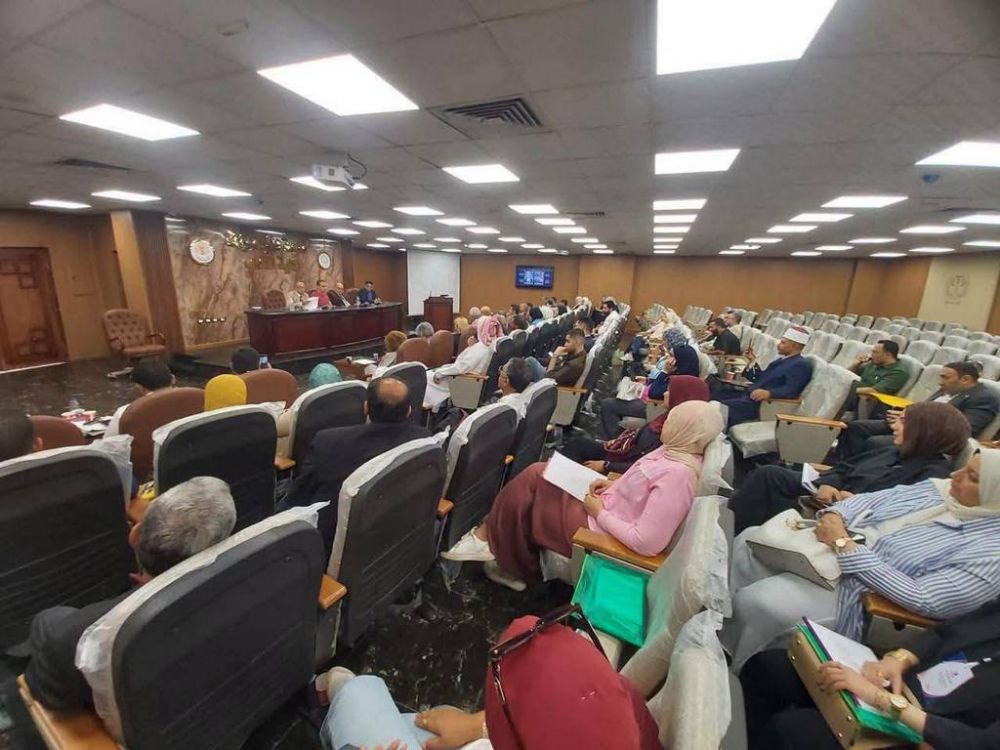
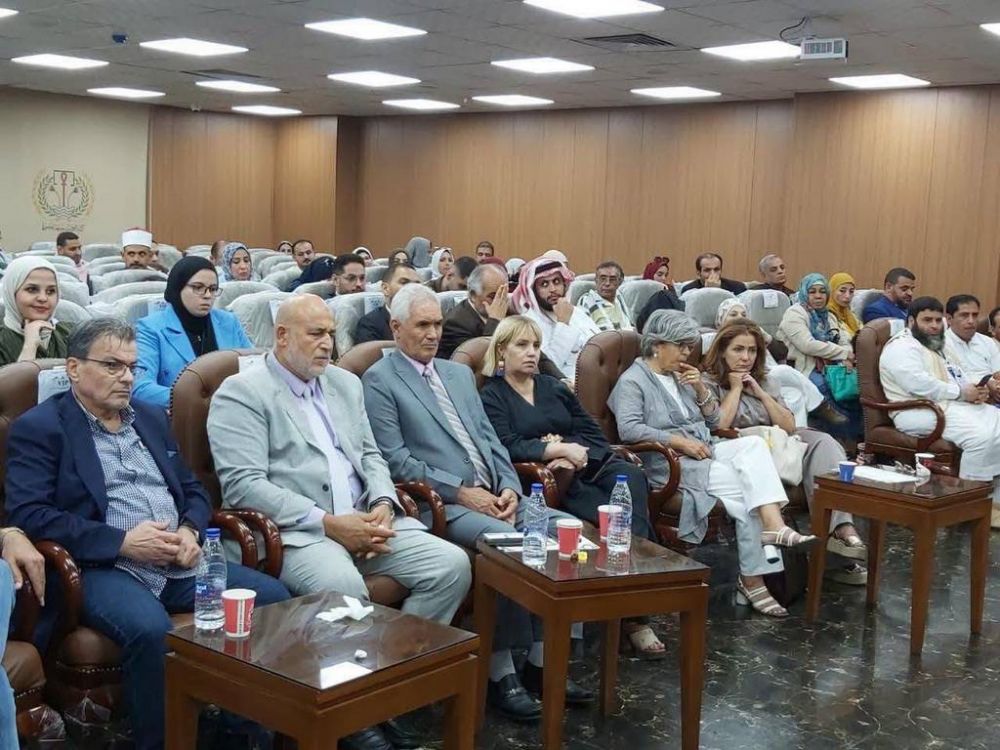
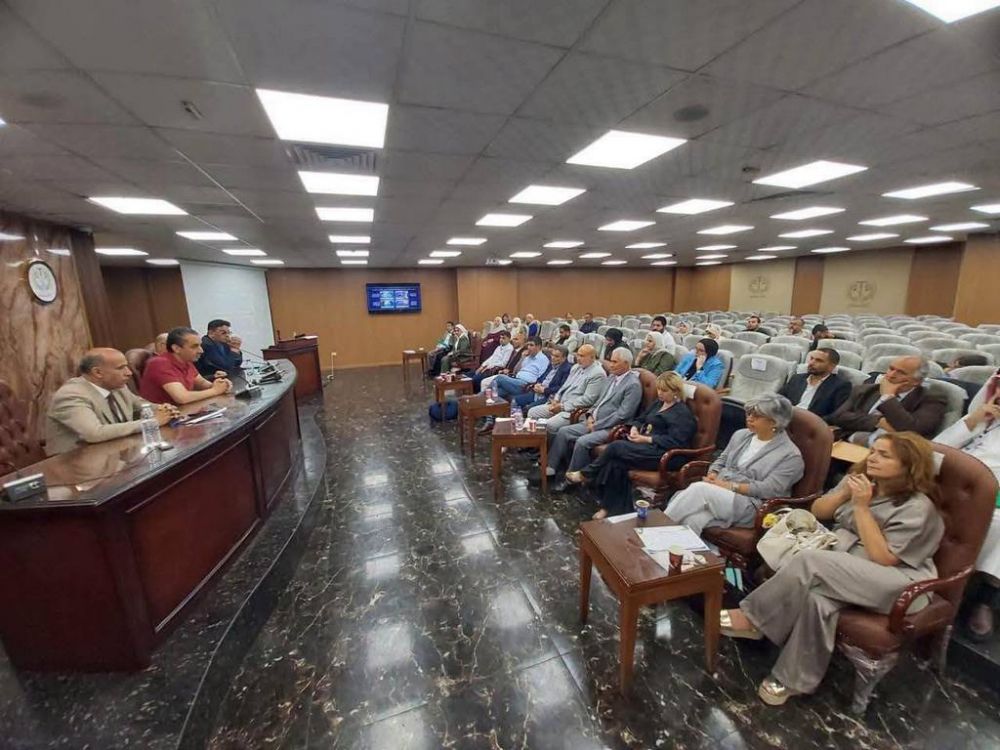
The second day of the conference saw the continuation of its scientific sessions, which discussed the philosophical, ethical, and epistemological dimensions of artificial intelligence applications. The closing session was dedicated to reviewing the most prominent outcomes of the discussions and announcing the conference's recommendations.
The conference concluded with a closing session chaired by Prof. Mahmoud Al-Gaidi. Prof. Abdel-Aal Abdel-Rahman, a professor in the Philosophy Department, presented the draft recommendations, explaining that they were the culmination of the scientific research, working papers, and discussions held during the conference. These recommendations reflected the participants' interest in exploring the relationship between philosophy, artificial intelligence, and the future of the humanities.
During the closing session, the committee emphasized that the conference provided an opportunity to exchange experiences and present scientific perspectives on issues related to artificial intelligence and its implications for the humanities. This, in turn, contributes to the development of scientific research, supports the educational process, and aligns with the state's directions in the field of digital transformation. The scientific discussions also agreed that the rapid development of artificial intelligence technologies necessitates that universities develop their curricula and research methodologies while upholding human values and ethical standards governing the use of these technologies in education and scientific research.
The conference recommendations focused on several priorities, including developing academic policies, establishing ethical guidelines for the use of artificial intelligence applications, supporting interdisciplinary research, and creating regulatory frameworks that help universities and scientific research institutions utilize these technologies effectively.
In the field of university education, the conference recommended including a course on "Ethics of Technology and Artificial Intelligence" within the requirements of various university disciplines, developing curricula that enhance skills in dealing with digital knowledge sources and verifying their reliability, and fostering critical thinking. It also recommended organizing training programs for students, faculty members, and staff in the areas of digital security, data protection, knowledge management, and the use of artificial intelligence applications in education and scientific research. In the area of governance and legislation, the conference recommended developing a national and institutional framework for evaluating and approving artificial intelligence (AI) applications before their deployment, particularly in sectors with a direct impact on individuals, such as education, health, justice, and employment. This framework should include clear standards for transparency, accuracy, and interpretability, and require developers to disclose the systems' operational mechanisms, limitations, and expected error rates.
In the field of scientific research, the conference called on universities and research centers to develop clear policies for the use of AI tools in scientific research. These policies should include transparency regarding their use, defining controls for their application, and prohibiting the reliance on AI outputs as independent scientific sources. Furthermore, the conference emphasized the importance of verifying original sources and citations, and updating research ethics regulations to govern the use of AI applications and mechanisms for addressing related violations. In the area of digital transformation and knowledge innovation, the conference recommended establishing guidelines for the use of artificial intelligence in translation within universities and various institutions. These guidelines would mandate human review before final texts are approved. The conference also recommended developing national standards for evaluating the quality of AI-based translations, as well as launching a project to digitize Arabic manuscripts and scientific and philosophical heritage, making them accessible through databases that support indexing, searching, and retrieval.
In the area of future studies, the conference recommended supporting interdisciplinary research projects that bring together departments of philosophy, computer science, and law. It also recommended launching a regular scientific forum that includes philosophers, AI experts, legal professionals, and policymakers to discuss philosophical, ethical, and legislative issues related to technological development. Furthermore, the conference encouraged studies that explore the impact of artificial intelligence on society, the labor market, identity, and values.

View the embedded image gallery online at:
https://wwwold.mans.edu.eg/en/mans-news/mansoura-university-arts-faculty-concludes-sixth-international-conference-on-ai-ethics#sigProGalleria205d082d49
https://wwwold.mans.edu.eg/en/mans-news/mansoura-university-arts-faculty-concludes-sixth-international-conference-on-ai-ethics#sigProGalleria205d082d49


